
Multifamily Development
Multifamily Construction Financing
An apartment project is underwritten twice: once as a construction budget, once as a future income stream. The financing has to respect both.
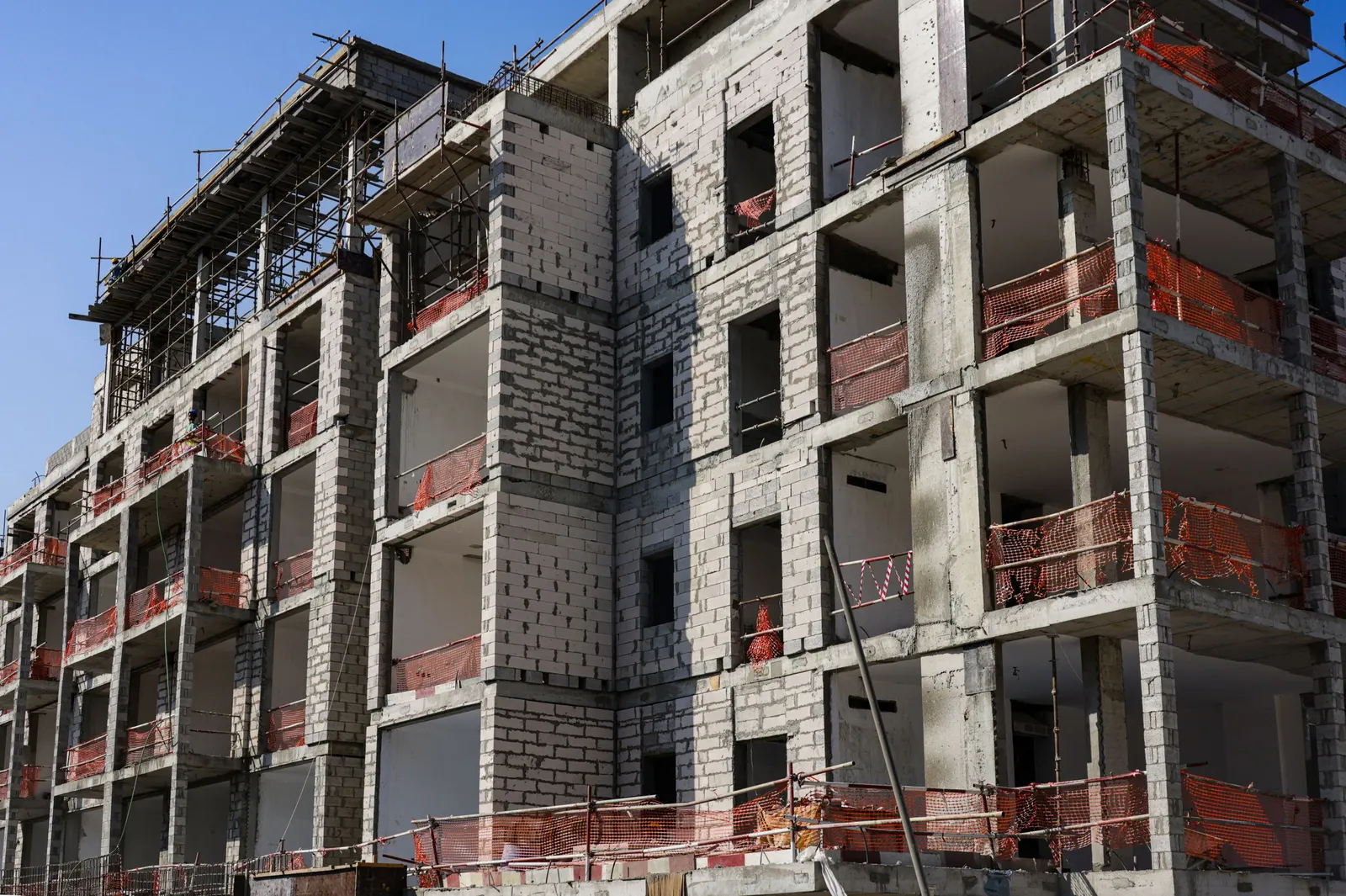
- Core focus
- Multifamily construction with a core focus on $3 million to $25 million transactions, boutique projects from $3 million and larger developments structured institutionally
- Property types
- Boutique and mid-rise apartments, luxury and workforce rental, mixed-use residential, adaptive reuse where feasible
- Program parameters
- Confirmed during project review: leverage, term, pricing, and conditions vary by project, sponsorship, and capital source
Who this serves
- Developers of boutique and infill multifamily projects
- Sponsors building mid-rise and podium apartment product
- Builders of luxury and workforce rental communities
- Developers of mixed-use projects where residential drives the income
- Sponsors converting existing buildings to residential use where feasible
When it fits
- The site is entitled for five or more units and the plans are advancing
- A complete budget exists, including carry through lease-up
- Market rents and absorption support the underwritten income
- The permanent exit (refinance or sale) pencils under conservative assumptions
A multifamily construction loan finances two things at once: a building and a business. The building is the budget, the schedule, the contractor, and the draw sequence; the business is the rent roll that does not exist yet: the rents, the absorption pace, and the operating costs that determine what the finished property is worth. Files succeed when both stories are credible and fail when either one is borrowed from a more optimistic market.
Evoque Commercial arranges business-purpose construction financing for residential properties of five units and more, the range where agency templates stop fitting and project-specific structure starts to matter. Multifamily construction financing runs across our core transaction range of $3 million to $25 million: boutique infill projects from $3 million and mid-sized developments through $25 million are the heart of the program, and institutional-scale developments are structured through relationships built for their size.
When multifamily construction financing fits
The program fits a defined development: a site entitled for five or more units, plans advanced or complete, a budget that includes carry through lease-up, and an exit that works under conservative assumptions. Smaller residential projects and for-sale product belong on ground-up construction financing or the for-sale program pages. A stabilized refinance is a different transaction, and a project already under construction with a funding problem starts at construction completion financing; bringing it forward early preserves options.
The multifamily spectrum this platform serves
Boutique and infill projects (walk-ups, garden clusters, tight urban sites) are a core of the practice. Mid-rise and podium construction carries heavier structural budgets and longer schedules, and the underwriting adjusts. Luxury product trades on finish and amenity spend that achievable rents must justify; workforce housing is served where the project and market support it.
Affordable housing with regulatory agreements and subsidy layers is evaluated where eligible; restricted rents change the underwriting and the pool of capital sources. Mixed-use projects fit when residential income genuinely drives the deal, with ground-floor commercial underwritten conservatively. Adaptive reuse (office, hotel, or industrial shells converted to residential) is reviewed case by case on structural condition, budget verification, and unit competitiveness.
What the financing typically covers
A multifamily construction facility is sized against the complete sources-and-uses. Depending on the file, it may include land acquisition or existing basis, hard costs, soft costs from architecture through permits, financing costs, an interest reserve sized to construction and initial lease-up, and an operating reserve where planned. Draws fund against completed, inspected work, with retainage and inspections tracking progress. Contingency is not optional; multifamily schedules are long enough that something will move, and the budget should already know it.
What capital sources evaluate
The income story is examined first: underwritten rents against comparable properties, absorption against what the submarket has actually leased, operating expenses against real data, and concessions treated as a market fact. The supply pipeline matters: delivering into a wave of competing projects is a different risk than delivering alone. Then the construction story: budget completeness, contractor capacity on comparable product, schedule realism, and contingency depth.
Around both sit sponsorship, basis relative to stabilized value, and exit durability, often expressed through the stabilized debt yield. Leverage, pricing, term, and recourse are confirmed during project review; they vary by project, sponsorship, and capital source.
Sponsorship, equity, and the sources-and-uses
Multifamily construction rewards sponsors who have built and operated rental product; the file is judged on operations as much as construction. Sponsor equity may be cash, land basis, or a structure that includes structured capital behind the senior loan: mezzanine or preferred equity layered with intercreditor terms settled before closing. Where land carries existing debt, the payoff or subordination is part of the closing plan. The sources-and-uses should be complete through stabilization, not merely the certificate of occupancy; the gap between those dates is where undercapitalized projects surface.
From completion through stabilization
The certificate of occupancy starts the clock on the project's second act. Lease-up consumes marketing, concessions, and carry while income builds, and construction loans are not designed to wait indefinitely. The durable plan names the handoff in advance: a construction-to-bridge transition that retires the construction loan near completion and carries the property through lease-up to a stabilized refinance or sale. Sponsors who map that sequence before the first draw choose their transition; those who defer it negotiate from a maturity date.
Lease-up is also an operating task with its own budget: management in place before the first move-in, marketing that starts during construction, leasing staff sized to the delivery schedule. Files that treat operations as an afterthought lease slower and refinance later, a cost no financing structure can absorb.
Exit strategy
The takeout is underwritten on day one. A permanent refinance requires the stabilized property to support the debt on the market's future terms, which is why conservative rents and honest expense loads matter more than proforma polish. A sale exit requires depth of buyers for the product type at the projected basis. Both paths are stress-tested during review; a construction loan whose exit only works in the best case is not a plan but a deferred problem.
Documentation to expect
The core set: plans and specifications, the construction budget and schedule, entitlement and permit documentation, general contractor information and record, the rent and expense proforma with supporting comparables, the sponsor's development and operating résumé with a financial summary, and a current sources-and-uses. Third-party reports (appraisal with an income approach, environmental, plan and cost review) are ordered during processing. The developer document checklist generates the multifamily list.
Where multifamily files get difficult
The familiar failure points: rents underwritten above the comp set, absorption borrowed from a hotter market, expenses rounded down, an interest reserve sized to the fastest lease-up anyone remembers, a supply pipeline nobody checked, and conversion budgets that meet the building's actual condition mid-demolition. None of these is automatically fatal. Each is cheaper confronted in review than at month eight of construction, and a file that has confronted them reads as institutional, whatever its size.
Frequently asked questions
Does the construction loan carry the property through lease-up?
Construction facilities typically carry a project to completion and some distance beyond, but lease-up to stabilization is often better served by a purpose-built bridge. Planning that handoff before the certificate of occupancy is issued reduces transition risk. The full sequence is mapped during the initial project review.
Do I need an appraisal and market study before applying?
No; third-party reports are ordered during processing. What you do need is a credible rent and absorption story supported by comparable properties, because the underwritten income is tested against the market early. A proforma built on outlier comps slows every file it touches.
Can workforce or affordable projects be financed on this platform?
Where the project and its capital sources support it, yes. Regulatory agreements, subsidy layers, and restricted rents change the underwriting and narrow the pool of capital sources, so eligibility is confirmed during project review rather than assumed.
What about adaptive reuse, like converting an office or hotel to apartments?
Conversions are evaluated case by case. The questions are structural condition, the realism of the conversion budget, zoning, and whether the finished units compete in their submarket. Strong sponsors with verified budgets get the most serious reads.
Who signs the completion guaranty on a multifamily construction loan?
Construction lending generally involves completion support from the sponsorship, and the form varies by structure and capital source. Recourse expectations, carve-outs, and guaranty structures are confirmed during project review as part of the term discussion.
Related resources
Financing
Ground-Up Construction Financing
Construction financing for entitled and shovel-ready residential projects, structured around the budget, the draw schedule, and the exit.
Financing
Construction-to-Bridge Financing
The planned handoff from construction loan to stabilization: retiring construction debt at completion and carrying lease-up to a permanent exit.
Solution
Lease-Up Bridge Financing
The certificate of occupancy ends construction, not carry. How lease-up bridges are structured, what stabilization actually means, and how the takeout gets planned honestly.
Solution
Refinancing Before Certificate of Occupancy
Between the last inspection and the certificate of occupancy sits a financing dead zone. How near-completion refinances are structured, and when finishing first is the better plan.
By Loan Size
$8 Million to $15 Million Development Financing
The second of our core transaction ranges, where condominium projects, mid-sized subdivisions, multifamily, and build-to-rent phases meet layered capital structures, fuller report sets, and coordination that has to be managed deliberately.
Financing
Residential Development Financing
Financing structured around the residential development lifecycle, from site acquisition and entitlements through horizontal development, vertical construction, lease-up, and exit.
Reviewed by Eddie Luhrassebi, Founder & CEO · CA DRE #01230650 · NMLS #337071 · Last updated July 21, 2026
Nothing on this page is a commitment to lend, a rate or term quote, or an approval. Any financing described is subject to full underwriting, third-party reports, documentation, and approval by the applicable capital source. Submitting a project review request does not create a commitment of any kind.
Financing structures described on this page may not be available for every project, sponsor, location, or point in time. Availability depends on project feasibility, sponsorship, market conditions, and the requirements of participating capital sources. State availability may vary.