
Can a project with a $50 million capitalization still fail because of a three-day delay in a lien waiver signature? In a market where credit conditions for residential AD&C loans have tightened for 18 consecutive quarters as of Q2 2026, the margin for error in vertical construction financing has never been thinner. You've likely experienced the frustration of delayed draw approvals or unexpected interest carry costs that erode your projected margins. It's a high-stakes environment where a single break in the funding rhythm can lead to costly site work stoppages.
Mastering these complexities requires a disciplined approach to liquidity management. This article provides a clear framework for structuring draw schedules, managing interest reserves, and meeting the rigorous reporting standards of institutional lenders. We'll examine how to optimize your capital stack for the vertical phase and adapt to new regulatory shifts and evolving retention requirements. By the end of this guide, you'll have the tools to maintain a predictable funding pace from the first vertical lift through to project completion.
The Role of Vertical Construction Financing in the Project Lifecycle
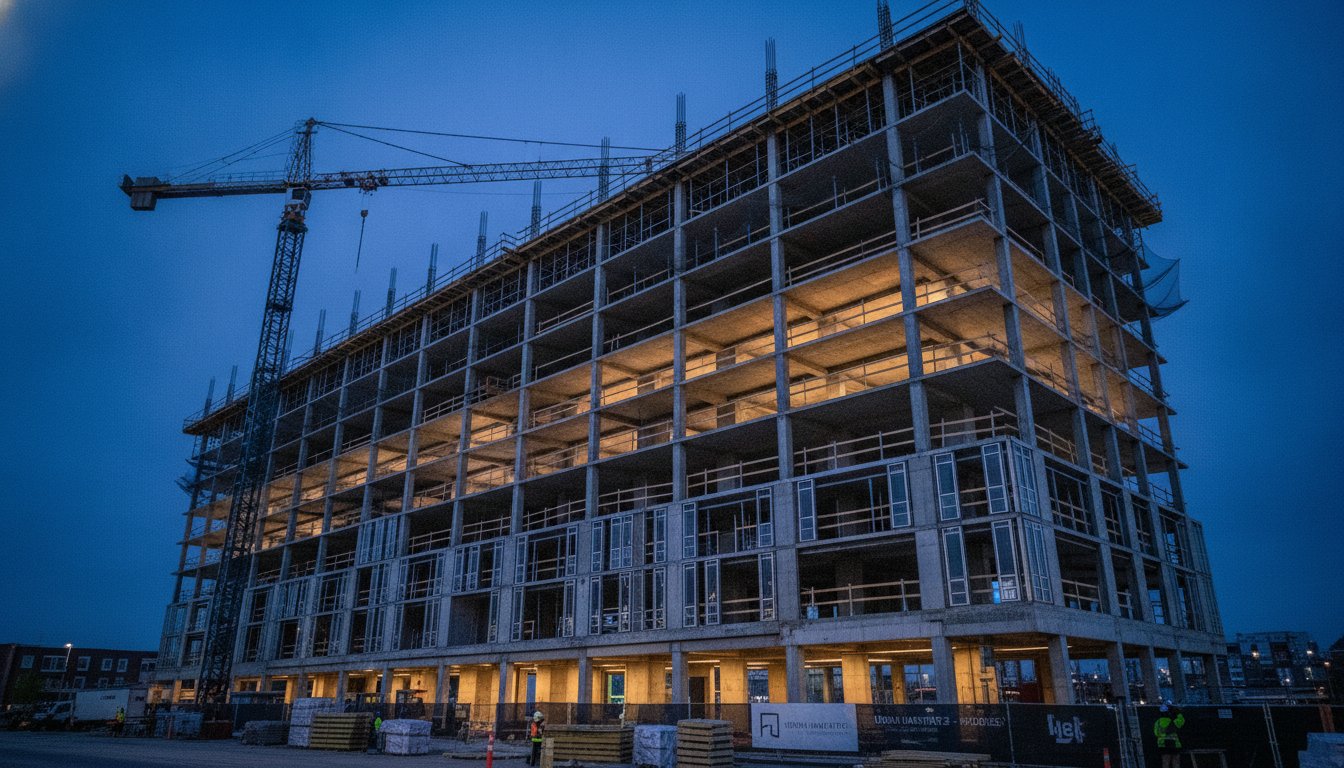
Vertical construction financing represents the capital deployed specifically for above-ground structural work. While land acquisition and horizontal development focus on the earth, utilities, and infrastructure, the vertical phase is where the project's primary value is realized. It's the transition from preparing the site to building the asset. This phase demands higher precision in underwriting because the risks shift from environmental and permitting concerns to complex supply chain management, labor costs, and vertical delivery timelines. For developers, this funding dictates the overall capital stack and determines the final equity requirements before the project moves toward stabilization.
Vertical vs. Horizontal Construction Funding
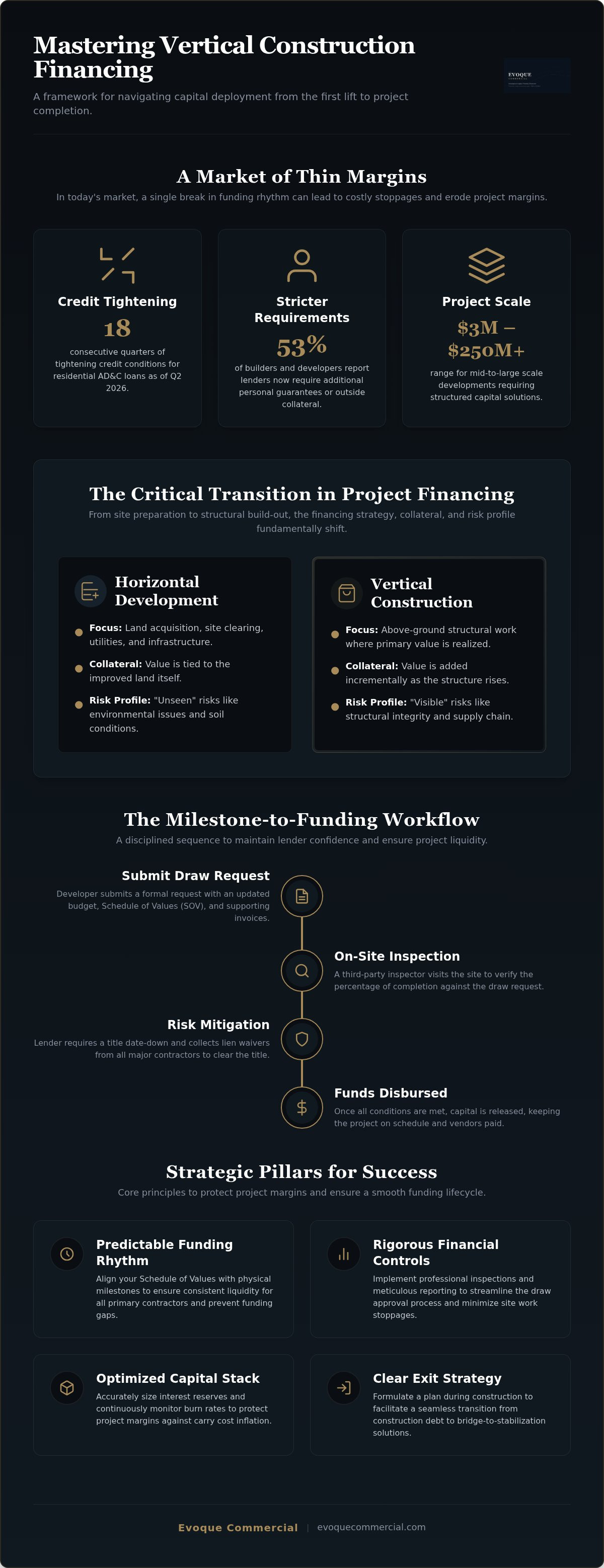
The transition from horizontal to vertical work isn't just a change in construction activity; it's a fundamental shift in the project financing structure. Horizontal funding covers site clearing and utility installation, where the collateral value is tied to improved land. In contrast, vertical construction financing supports the structural phase, where value is added incrementally as the building rises. Lenders often treat these as distinct facilities because the risk profiles differ. Horizontal work involves "unseen" risks like soil conditions, while vertical work involves "visible" risks like structural integrity and finish quality. Many institutional lenders require a formal "re-close" or a conversion of the loan once the project reaches the slab-on-grade milestone to ensure the underwriting reflects current market costs.
Strategic Capital for Mid-to-Large Scale Developments
Managing financing for projects ranging from $3 million to $250 million requires a balance of institutional reach and boutique responsiveness. In 2026, the market has seen credit conditions tighten for 18 consecutive quarters. According to Q2 2026 data, 53% of builders and developers report that lenders now require additional personal guarantees or outside collateral. This environment makes specialized Ground-Up Construction Financing and structured capital solutions essential. Institutional capital partners are prioritizing "clean" deals with strong sponsors and realistic contingencies. For luxury residential and multifamily subdivisions, the ability to pivot quickly during the vertical phase is a competitive advantage. Large-scale lenders look for sponsors who can demonstrate a predictable funding rhythm and a clear path to project completion despite elevated, though stabilizing, interest rates.
Structuring an Effective Construction Draw Schedule
An effective draw schedule acts as the operational roadmap for project liquidity. In vertical construction financing, where capital needs escalate rapidly as the structure rises, this schedule ensures that vendor payments align with actual progress. Developers must meticulously map the Schedule of Values (SOV) to physical milestones to prevent over-funding or liquidity gaps. This is essentially a short-term loan to cover building costs that requires active management to stay on track. This process involves balancing hard costs like structural steel and concrete with soft cost reimbursements for architectural or legal fees. A robust contingency line item is also non-negotiable. Vertical builds face unique risks such as weather delays or specialized labor shortages that require immediate financial buffers.
The Milestone-to-Funding Workflow
The draw process follows a disciplined sequence to maintain lender confidence. The developer starts by submitting a formal draw request accompanied by an updated budget and supporting invoices. Then, a third-party inspector visits the site to verify the percentage of completion against the SOV. This step ensures that the funds requested match the physical work in place. Finally, the lender requires a title date-down and the collection of lien waivers from all major contractors to mitigate risk. For developers managing high-leverage projects, partnering with a firm that provides Ground-Up Construction Financing can help streamline these administrative hurdles and keep the site active.
Optimizing Draw Frequency for Cash Flow
Choosing between monthly and milestone-based draws depends on the project's scale and the sub-contractors' needs. Monthly draws are standard for large-scale residential developments because they provide a steady rhythm for payroll and material costs. However, milestone-based draws can be more efficient for specific phases, such as topping out or building envelope completion. Managing sub-contractor expectations is critical; delays in payment can lead to labor shortages or lien filings. This is especially important in 2026, as 53% of developers report tighter lender scrutiny regarding collateral. By 2026 standards, the percentage of completion draw method is defined as a disbursement strategy where funds are released based on a verified proportion of work finished within specific line items of the total project budget.
Financial Controls and Risk Mitigation during Construction
Lenders view vertical construction financing as a living risk that requires constant monitoring. Maintaining institutional confidence involves more than just meeting milestones; it requires transparent, real-time reporting. An inspecting architect or engineer serves as the lender's eyes on the ground, verifying that the quality and quantity of work match the funds requested in the draw. Change orders represent a primary friction point in this process. If not managed with precision, these adjustments can trigger a "re-balancing" of the loan where the developer must inject additional cash to cover the variance. Continuous lien monitoring and updated title insurance policies provide the final layers of protection, ensuring the lender's first-position lien remains unencumbered by contractor disputes.
Lien Waivers and Title Date-Downs
Standardizing sub-contractor paperwork is the most effective way to prevent draw delays. Developers should collect conditional lien waivers before payment and unconditional waivers once funds clear. This process protects the project from mechanics liens that could otherwise stall a high-leverage build. In 2026, California's SB 61 caps retention at 5% for most private contracts. While this improves contractor cash flow, it requires developers to be even more vigilant with title date-downs. These date-downs are mandatory before each funding event. They confirm that no new encumbrances have been filed since the previous draw, keeping the project's legal standing clear for institutional capital partners.
Budget Reconciliation and Overrun Management
Lenders use a "Cost-to-Complete" analysis to ensure that remaining loan proceeds always cover the work left to be done. If the budget drifts due to material price spikes or labor shortages, the "Equity First" rule typically applies. This means the developer must deploy their own capital to fill any gaps before the lender releases another dollar. Effective risk mitigation involves tracking the "burn rate" of contingencies and reallocating funds between line items only with express approval. This disciplined approach prevents technical defaults and ensures the project maintains its funding rhythm. In a market where 53% of builders report tighter credit conditions, demonstrating this level of fiscal control is essential for maintaining a positive relationship with your capital source.
Optimizing Interest Reserves and Carry Costs
Interest reserves represent the financial oxygen of a project during its most capital-intensive phase. When structuring vertical construction financing, the reserve is sized based on the projected average loan balance over the build duration. In 2026, with bank financing rates ranging from 6.5% to 9.5% and private lenders starting at 9%, even minor schedule slips lead to significant carry cost overruns. Managing the "burn rate" requires constant monitoring. If the reserve depletes before the project generates sales or rental income, the developer faces a liquidity crisis. Replenishing these reserves often requires a capital call or a secondary debt layer. Floating rates add another layer of complexity. While the Fed funds target range has held between 3.50% and 3.75% through mid-2026, developers must still model for potential volatility in their vertical construction financing carry cost projections to avoid technical defaults.
Mitigating Interest Carry in High-End Spec Projects
Luxury residential development loans require specialized reserve structures because of the longer absorption periods and higher finish costs associated with high-end assets. Speed of construction is the most effective hedge against interest carry. Every month saved on the schedule reduces the total interest paid and improves the project's internal rate of return. For developers with completed but unsold units, inventory financing can serve as a strategic tool to release equity. This allows the sponsor to pay down high-cost construction debt while managing the carry costs of the remaining units during the sales phase. It’s a method of rebalancing the capital stack when the vertical phase is finished but the exit hasn't yet materialized.
Structured Capital Solutions for Stalled Projects
When unexpected escalations or delays exhaust the original interest reserve, projects often stall. This is where Construction Completion Financing becomes a vital lifeline. Generic lenders often shy away from projects in mid-build, but specialized firms look at the remaining value and the path to stabilization. Recapitalization involves more than just adding cash; it requires a structured approach to salvage the equity already deployed. Evoque Commercial specializes in these complex structured capital solutions, providing the rescue capital needed to bridge the gap between a stalled site and a successful exit. This approach focuses on realistic timelines and ensuring the project has enough runway to reach its next milestone without further liquidity breaks.
Navigating the Exit: Stabilization and Refinancing
A successful exit strategy begins during the early stages of the vertical build. While vertical construction financing provides the capital for structural completion, it isn't designed for a long-term hold. Developers must plan for the transition to permanent debt or a sale well before the building reaches its topping-out ceremony. The primary goal is to ensure that the liquidity maintained during the draw process translates into a clean handoff to the next capital layer. This requires a disciplined look at the project's final 10% and a clear understanding of market conditions for stabilized assets in 2026.
The Certificate of Occupancy (CO) serves as the ultimate financial pivot point. It's the document that triggers final loan draws and releases remaining retention funds. In California, where SB 61 caps retention at 5% for new private contracts as of January 2026, this milestone remains the gatekeeper for project closeout. Reaching the CO signifies that the project has moved from a construction risk to an operational risk. Lenders look for this transition to be seamless. Any delay in obtaining occupancy permits can lead to a gap in the interest reserve and a potential liquidity crunch at the most critical moment.
Bridge-to-Permanent Financing Strategies
Bridge-to-stabilization loans offer a strategic buffer between construction completion and long-term financing. These facilities are especially useful for multifamily projects that require a lease-up period to meet the Debt Service Coverage Ratio (DSCR) requirements of permanent lenders. Evaluating the capital stack at this stage often involves analyzing the role of mezzanine debt. Mezzanine layers can provide the necessary leverage to retire the construction loan while the asset gains its footing. This approach allows developers to release equity or pay down high-cost structural debt without rushing a sale in an unfavorable market. It provides the project with the necessary runway to reach full stabilization.
Securing the Next Phase with Evoque Commercial
The transition from a construction site to a stabilized asset requires a partner who understands the nuances of both phases. Evoque Commercial provides the boutique responsiveness needed to move quickly when a project reaches the CO milestone. By leveraging institutional capital reach, we help developers secure structured capital solutions that provide the runway for long-term success. Our team focuses on the technical details of the project's final phase, ensuring that the capital structure remains optimized for the developer's ultimate goal. If you're approaching the structural completion of your project, Request a project review with Evoque Commercial to explore your stabilization and refinancing options.
Securing Project Momentum
through Completion
Managing the structural phase of a major development requires more than technical expertise; it demands a disciplined financial strategy. We've explored how a well-structured draw schedule acts as the project's heartbeat, ensuring that liquidity flows precisely when it's needed. By implementing rigorous financial controls and accurately sizing interest reserves, you can protect your margins against the volatility of carry costs. These elements are the foundation of successful vertical construction financing, allowing you to navigate the complexities of structural work while maintaining lender confidence through to the final Certificate of Occupancy.
The transition from vertical completion to a stabilized asset is a critical milestone that requires a partner with both institutional reach and boutique responsiveness. Whether you're developing a luxury residential subdivision or a large-scale multifamily project, your capital stack should be as resilient as your structure. Evoque Lending provides specialized financing from $3 million to $250 million, offering the strategic capital solutions needed to move your project from the ground up to a successful exit. Explore Tailored Financing Paths for Your Next Development and ensure your project maintains its momentum in any market environment. We're ready to help you build with confidence.
Frequently Asked Questions
What is the difference between horizontal and vertical construction financing?
Horizontal financing covers site preparation and infrastructure like utilities. Vertical construction financing focuses on the structural build above the ground. While horizontal loans carry environmental and permitting risks, vertical loans are sensitive to labor costs and supply chain timelines. Institutional lenders often require a formal re-close or a conversion when the project transitions from the slab-on-grade milestone to the structural framing phase.
How is a construction draw schedule typically structured for multifamily projects?
In large-scale multifamily projects, the schedule is typically structured on a monthly basis to align with contractor payroll. It uses a detailed Schedule of Values where each line item represents a specific trade or material. Funds are released based on the percentage of completion for each item. This ensures liquidity is maintained throughout the vertical build without over-advancing capital before the work is physically verified on-site.
What are interest reserves, and how are they calculated in a construction loan?
Interest reserves are a portion of the loan set aside to cover monthly interest payments during the construction period. Lenders calculate this amount by forecasting the average outstanding balance over the project's duration and applying the interest rate. In 2026, with private rates reaching 9% to 12%, accurately sizing this reserve is essential. If a project stalls, the "burn rate" of this reserve can quickly lead to a liquidity gap.
Can I get financing for a project that is already partially built?
Yes, specialized lenders provide Construction Completion Financing for projects that have already broken ground. This often occurs when a project faces cost escalations or a change in sponsorship. The lender'll conduct a thorough audit of the work in place and a cost-to-complete analysis. This structured capital solution allows developers to recapitalize a stalled site and move toward stabilization when traditional bank sources might pull back.
What documents are required for a vertical construction draw request?
A standard draw request requires an updated budget, a summary of the Schedule of Values, and current invoices from all vendors. You must also include conditional lien waivers for the current request and unconditional waivers for the previous payment. A third-party inspection report and a title date-down are mandatory. These documents provide the transparency institutional lenders require to release funds while mitigating the risk of mechanics liens or budget imbalances.
What is a lien waiver, and why is it required for every draw?
A lien waiver is a legal document where a contractor or supplier gives up their right to file a mechanics lien against the property in exchange for payment. Lenders require these for every draw to ensure the project's title remains clear. With California's SB 61 capping retention at 5% as of January 2026, continuous lien monitoring has become a standard requirement for maintaining the lender's first-position security interest.
How does Loan-to-Cost (LTC) differ from Loan-to-Value (LTV) in vertical builds?
Loan-to-Cost (LTC) measures the loan amount against the total actual budget for hard and soft costs. Loan-to-Value (LTV) compares the loan to the projected market value of the building upon completion. In high-leverage vertical construction financing, lenders typically cap the loan at the lower of these two metrics. For example, a project might be approved for 85% LTC but only 70% of the stabilized LTV to protect against market fluctuations.
What happens if my construction project goes over budget?
If a project exceeds its budget, the "Equity First" rule usually applies. This means the developer must inject their own capital to cover the shortfall before the lender releases any further loan proceeds. This process, known as re-balancing, ensures the loan remains "in balance" and that enough funds exist to reach completion. If the developer can't provide the equity, they may need to seek structured capital solutions or completion financing to avoid a default.