
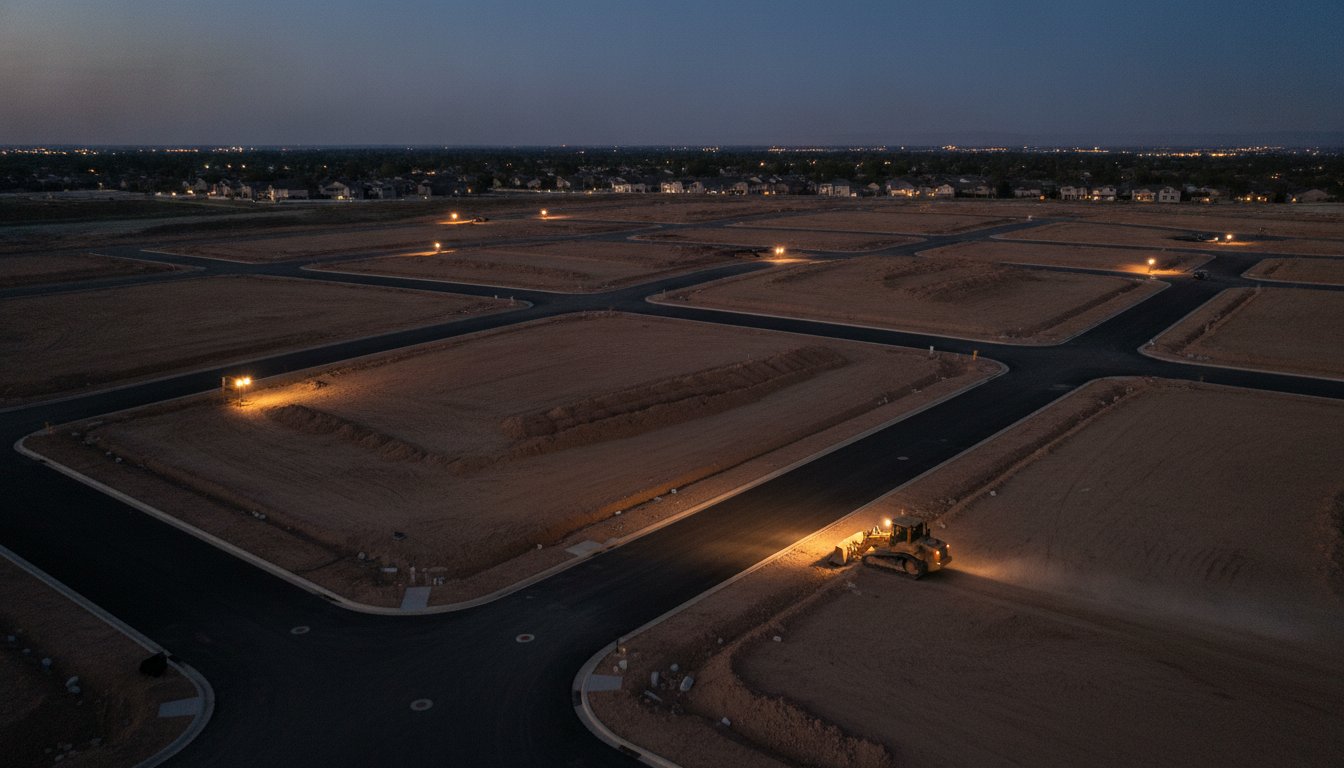
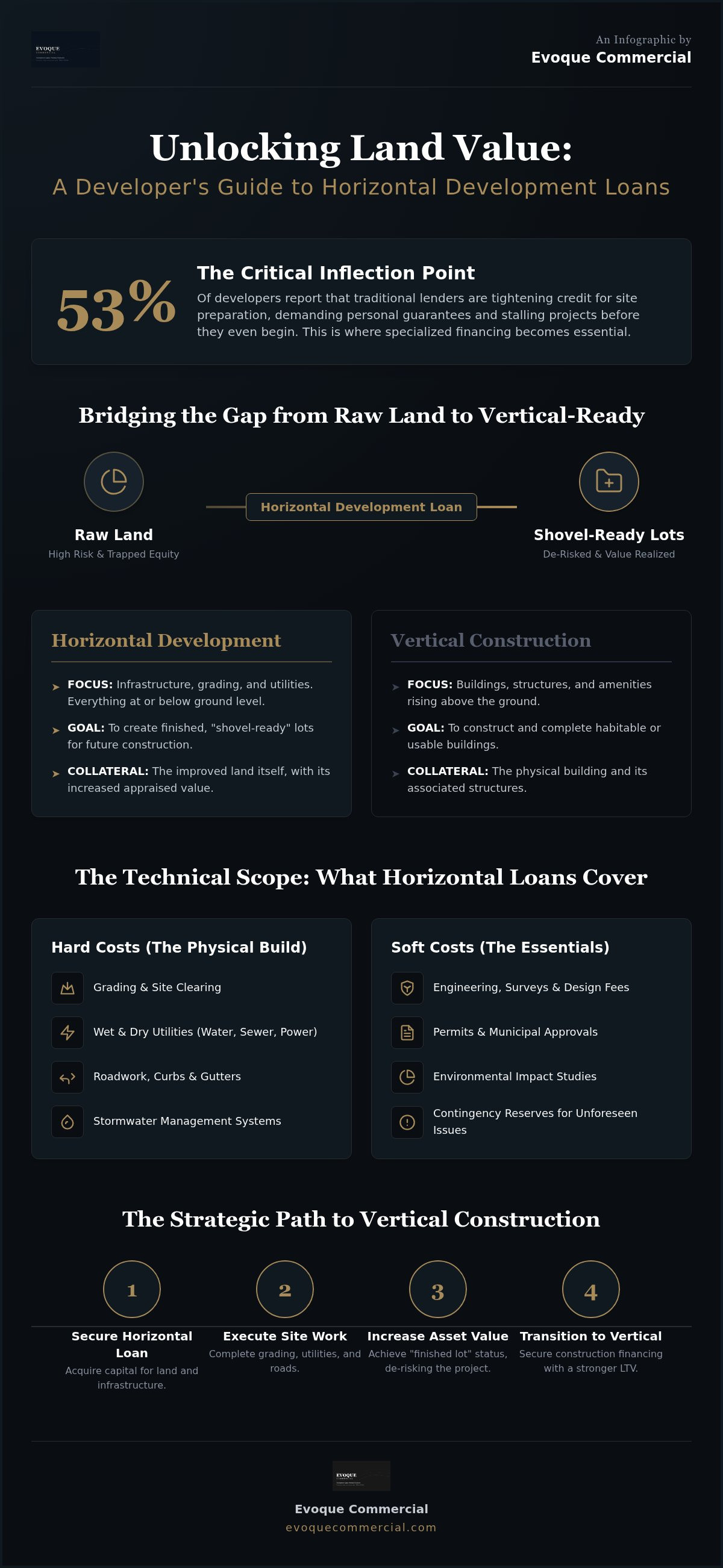
When 53% of developers report that lenders are tightening credit by demanding personal guarantees, it's clear the market for site preparation has reached a critical inflection point. Traditional banks often view the transition from raw land to buildable lots as a high-risk gamble. This institutional caution often leaves ambitious projects stalled before the first utility line is even laid. Securing horizontal development loans shouldn't feel like an uphill battle against a lender who doesn't understand your vision. It requires a strategic partner who recognizes that infrastructure is the essential bridge that actualizes the value of your entire asset.
You likely recognize that the space between acquisition and vertical construction is where equity often remains trapped and schedules face the most friction. This article will help you master these complexities and transform raw acreage into institutional-grade residential lots with precision. We'll explore how to manage complex draw schedules, maximize your leverage on land acquisition, and secure the reliable capital needed for grading and utilities. This guide provides a disciplined roadmap for a seamless transition from your initial site work to your eventual ground-up construction phase.
What Are Horizontal Development Loans?
Horizontal development loans represent the strategic capital used to transform raw acreage into a shovel-ready site. Unlike a simple land loan that merely covers the purchase price, these facilities fund the physical alteration of the property. This phase is the most critical stage of Land development, as it bridges the gap between entitlement and vertical construction. While vertical loans focus on the structures rising above the ground, horizontal financing focuses on everything below it or at grade level. Securing horizontal development loans allows a developer to move past the speculative phase of land ownership into active value creation.
Traditional banks often perceive these projects as high-risk endeavors. Without a physical building to serve as collateral, lenders must rely on the developer's ability to execute complex engineering plans. If a project stalls during the grading phase, the bank is left with a partially excavated site that is difficult to liquidate. This is why horizontal debt plays such a specialized role within the broader land acquisition and development loans lifecycle. It provides the liquidity necessary to reach the "finished lot" stage, which is the primary requirement for traditional construction financing.
The Core Components of Horizontal Construction
The technical scope of horizontal work is broad and capital-intensive. It begins with grading and site clearing, where the topography is reshaped to create buildable pads. Following this, developers must install wet and dry utilities. This includes sewer and water lines alongside power, gas, and telecommunications infrastructure. Finally, the project moves to roadwork, curbs, and gutters. These elements define the internal circulation of the development and are often the final milestones before a site is deemed ready for verticality. Each of these steps requires a disciplined draw schedule to ensure the horizontal development loans are utilized efficiently as milestones are met.
Value Creation Through Infrastructure
Infrastructure completion is the primary driver of value in the early development stages. Raw land carries significant entitlement and execution risk; however, once utilities are stubbed to the lot line and roads are paved, the property's appraisal value often increases substantially. This shift allows developers to improve their Loan-to-Value (LTV) ratios significantly. By completing the horizontal phase, you effectively de-risk the project for future vertical lenders who prefer to fund projects where the site's fundamental infrastructure is already secured and operational. This transition turns a speculative land hold into an institutional-grade residential asset.
The Technical Scope: What Horizontal Loans Cover
The technical scope of horizontal development loans extends far beyond simple earthmoving. These facilities are designed to fund the intensive engineering and physical labor required to turn a raw site into a legal, buildable subdivision. Hard costs form the bulk of the budget, covering the construction of roads, drainage systems, and necessary retaining walls. Soft costs are just as critical; they include the engineering fees, environmental impact studies, and municipal permits required to validate every cubic yard of dirt moved. Because site work is inherently unpredictable, experienced lenders insist on contingency reserves to manage unforeseen conditions during excavation, such as hitting unexpected rock or encountering high water tables.
Successful developers often integrate these funds with entitled land acquisition loans to streamline their capital stack. This coordination ensures that the transition from land purchase to active site work is fluid, maintaining project momentum and reducing the overall cost of carry. By aligning the acquisition debt with horizontal capital, you create a seamless funding environment that supports the project from the first dirt move to the final utility connection.
Infrastructure and Environmental Mitigation
Modern residential projects require sophisticated storm-water management systems, often involving extensive retention basins and underground detention vaults. Financing these elements is a core function of horizontal development loans. In infill residential development projects, capital may also be earmarked for environmental remediation to address legacy soil or groundwater issues. Beyond physical work, these loans must also cover front-end utility tap fees and municipal impact fees, which can represent a significant percentage of the total site budget before any vertical construction begins.
Entitlements and Permitting Milestones
Lenders view the progression from a preliminary plat to final plat approval as a key indicator of project health. The recorded plat is the ultimate collateral milestone, as it legally transforms a single parcel into individual buildable lots. To reach this stage, developers must maintain strict site control and satisfy municipal bonding requirements. These bonds guarantee that the infrastructure will be completed to public standards, providing an extra layer of security for the lender. If you are navigating these technical requirements for a large-scale project, a conversation about structured capital solutions can help clarify your path to shovel-ready status.
Loan Structures and Financing Terms for Developers
Financing the infrastructure phase requires a precise understanding of leverage and liquidity. For horizontal development loans, lenders typically offer a Loan-to-Cost (LTC) ratio between 60% and 75%, while Loan-to-Value (LTV) ratios generally hover between 50% and 70%. These limits reflect the inherent risk of land that lacks vertical structures. Because raw land produces no cash flow, these facilities are almost exclusively interest-only. Lenders usually require a capitalized interest reserve to cover debt service throughout the site-work phase. This ensures the project remains current even if grading takes longer than anticipated.
The repayment structure often hinges on lot release provisions, especially in single family subdivision financing. As you finish and sell individual lots to builders or move them into your own vertical pipeline, a portion of the sale proceeds goes toward paying down the horizontal debt. This release price is typically set at 110% to 120% of the loan amount per lot. This creates a disciplined deleveraging process as the project matures.
The Capital Stack for Horizontal Development
Large-scale projects often require a more complex capital arrangement than a single senior loan can provide. Senior debt handles the bulk of the infrastructure costs, but mezzanine capital or preferred equity can close the gap in acquisition costs. These structured capital solutions allow developers to maximize their cash-on-cash returns while maintaining the necessary liquidity for vertical starts. By layering different tiers of capital, you can achieve higher total leverage without overextending your primary senior position. It's a strategic way to manage equity while keeping your project on schedule.
Understanding Draw Schedules and Inspections
Infrastructure funding isn't released in a lump sum. It follows a rigorous draw schedule tied to physical milestones. A third-party inspector visits the site monthly to verify the completion of grading, utility installation, and roadwork. Lenders won't release funds without these inspections and a full set of lien waivers from subcontractors. This process protects the lender's position and ensures that all trades are paid. It's a methodical approach that prevents budget overruns. Managing these draws requires constant communication between your engineering team and the capital provider to avoid delays in the field. You'll need to balance the budget against unexpected site delays to maintain your credibility with the lender.
Strategic Risk Management: Transitioning to Vertical
The transition from horizontal site work to vertical construction is the most precarious moment in a project's lifecycle. Managing the "Vertical Exit" requires aligning your horizontal payoff with the closing of your ground-up construction financing. If these timelines don't match, you face carry risk; this is where interest costs eat into your margins while the site sits idle. However, achieving finished lot status fundamentally changes your risk profile. You've moved from speculative land to a tangible asset, which significantly increases the pool of vertical lenders willing to provide competitive terms. A project's successful navigation of the horizontal phase serves as the most reliable indicator of vertical success because it proves the developer's ability to manage the site's most unpredictable physical and regulatory challenges.
Lot Release Provisions and Inventory Financing
As individual lots are sold to builders, the proceeds are used to pay down the debt from your horizontal development loans. This is managed through lot release provisions, where the lender releases their lien on a specific parcel in exchange for a predetermined payment. To maintain project liquidity, it's vital to structure these as partial releases that don't starve the remaining phases of capital. If you have completed lots but aren't ready to start vertical work, you can use inventory financing to release equity from that stagnant land. This provides the necessary cash flow to bridge the gap or start the next phase of development without waiting for a total sell-out.
Managing Market Timing and Absorption
Success in large-scale residential projects depends on aligning your horizontal completion with seasonal buying cycles. If your roads and utilities aren't ready until the market enters a seasonal lull, your carry costs will spike. In these instances, bridge loans can stabilize the site, providing the time needed to secure a permanent vertical construction loan. For massive subdivisions, risk mitigation is best achieved through phased development. By breaking the project into smaller sections, you limit your exposure and ensure that the absorption rate of the first phase supports the financing of the second. If you're ready to secure capital for your next site, you can explore our luxury residential development loans to ensure your project maintains its momentum.
Partnering with Evoque for Horizontal Capital
Infrastructure financing requires a lender who understands the technical milestones of site work. Traditional institutions often lack the flexibility to underwrite raw land improvements, frequently retreating when credit conditions tighten. Evoque Commercial fills this gap by combining deep institutional capital relationships with the responsiveness of a boutique firm. We specialize in horizontal development loans that provide the essential bridge necessary to reach vertical construction. Our national coverage ensures that whether you're grading a luxury subdivision or installing utilities for a massive multifamily project, your capital is as disciplined as your engineering. We prioritize precision in our underwriting to ensure your project maintains its momentum from the first dirt move.
Institutional Strength, Boutique Execution
Our financing range from $3M to $250M allows us to support projects of significant scale while maintaining personal attention to detail. Large residential developments often face complex structural needs that standard bank products simply cannot accommodate. We utilize a streamlined review and underwriting process that respects the developer's timeline. By accessing diverse capital sources, we provide structured solutions including senior debt and mezzanine capital for high-leverage needs. This diversity ensures that your project isn't just funded but structurally optimized for the next phase of growth. We focus on the actualized value of the finished lot, recognizing that infrastructure is the primary catalyst for project equity. Our team understands that every site has unique challenges, and we tailor our execution to match those specific physical realities.
Commitment to the Developer’s Lifecycle
We don't view lending as a one-time transaction. Our approach covers the entire project lifecycle, from pre-development and acquisition through to stabilization. This continuity provides a safety net for developers, ensuring that the same strategic partner who funded the grading is ready to support the ground-up construction. We prioritize long-term relationships over short-term deals. This means we work with you to navigate the shifting regulatory and market conditions that occur during the long lead times of horizontal work. Our goal is to ensure your project remains on a clear path toward its vertical exit without unnecessary friction. By positioning ourselves as a strategic partner, we help you maximize your land acquisition leverage and prepare for a seamless transition into the building phase. Submit your horizontal development project for a strategic review with Evoque Commercial to see how we can optimize your capital stack.
Secure the Foundation of Your Development Lifecycle
Transforming raw acreage into a buildable subdivision requires more than just engineering; it requires a capital structure that understands physical milestones. By mastering the technical scope of site work and aligning it with strategic lot release provisions, you move beyond the risks that often deter traditional banks. Horizontal development loans are the essential bridge that actualizes land value and prepares your project for a competitive vertical exit. This phase is where equity is truly unlocked and project momentum is established for the long term.
At Evoque Commercial, we specialize in providing this structured residential capital through agile boutique underwriting backed by institutional strength. Our national financing solutions range from $3M to $250M, supporting your project from initial acquisition through to final stabilization. We're ready to serve as your strategic partner in navigating these complex financing paths with precision and discipline. Request a Project Review for Your Horizontal Development today to optimize your project's capital stack. Your vision for a shovel-ready site is within reach when you have the right financial partner by your side.
Frequently Asked Questions
What is the difference between horizontal and vertical construction loans?
Horizontal construction loans fund the physical transformation of the site, including grading, roadwork, and utility installation. Vertical loans are specifically for the structures rising above ground. Because horizontal work lacks a building as collateral, it requires specialized underwriting. Lenders focus on the finished lot value as the primary security. Most infrastructure debt is interest-only with capitalized reserves to manage debt service while the ground is being moved.
Can I get a horizontal development loan for raw land without entitlements?
Securing a loan for unentitled land is challenging because the risk of a project never reaching the construction phase is significantly higher. Most institutional lenders require at least a preliminary plat or a clear path to zoning approval before committing capital. If you lack entitlements, you may need to seek a land acquisition bridge loan first. This provides the time needed to secure municipal approvals before transitioning to a full development facility.
How much equity do I need for a horizontal development loan?
Developers typically need to contribute 25% to 40% of the total project cost as equity. While some lenders focus on Loan-to-Value (LTV) ratios of 50% to 65%, others prioritize Loan-to-Cost (LTC) limits of 70% to 75%. If you already own the land, the appreciation in value through the entitlement process can often be used as a credit toward your equity requirement. This reduces the amount of out-of-pocket cash needed for the infrastructure phase.
Does Evoque Commercial offer non-recourse horizontal financing?
We offer non-recourse and limited-recourse options depending on the project's leverage and the developer's track record. While many traditional banks demand full personal guarantees, our institutional capital relationships allow for more flexible structures. We focus on the quality of the collateral and the feasibility of the residential subdivision. For large-scale luxury projects, we can often structure horizontal development loans that limit personal exposure while maintaining competitive interest-only terms.
What are the typical loan amounts for horizontal development?
Evoque Commercial provides financing ranging from $3 million to $250 million. This broad range allows us to support mid-market developers as well as large-scale institutional projects across the United States. Whether you're preparing 20 luxury pads or a 500-unit multifamily site, we provide the capital depth required for intensive infrastructure work. Our national reach ensures we can fund horizontal development loans in diverse markets where traditional local banks might be hitting their lending limits.
How does the draw process work for horizontal construction?
The draw process follows a rigorous, milestone-based schedule verified by third-party inspections. You'll submit a draw request monthly for completed work such as clearing, grading, or utility installation. A lender-appointed inspector visits the site to confirm progress matches the budget. Funds are released only after the work is verified and all necessary lien waivers from subcontractors are collected. This methodical approach ensures that the project remains fully funded and legally protected throughout construction.
What happens if there are delays in municipal utility approvals?
Municipal delays are an inherent risk in site work, and we manage them through capitalized interest reserves. These reserves cover your monthly payments even if utility hookups or road approvals take longer than the original schedule. If a delay becomes significant, we work as a strategic partner to adjust the loan term or draw schedule. This responsiveness is vital for maintaining project momentum when local government timelines shift beyond your control during the development phase.
Can horizontal loans be rolled into a vertical construction loan?
Rolling horizontal debt into a vertical construction loan is a standard exit strategy for most developers. Once the site reaches the finished lot stage, a vertical lender provides a new facility that pays off the horizontal debt. This transition is often seamless if you use the same capital partner for both phases. It eliminates the need for multiple closings and reduces the risk of equity being trapped between the infrastructure and building stages.