
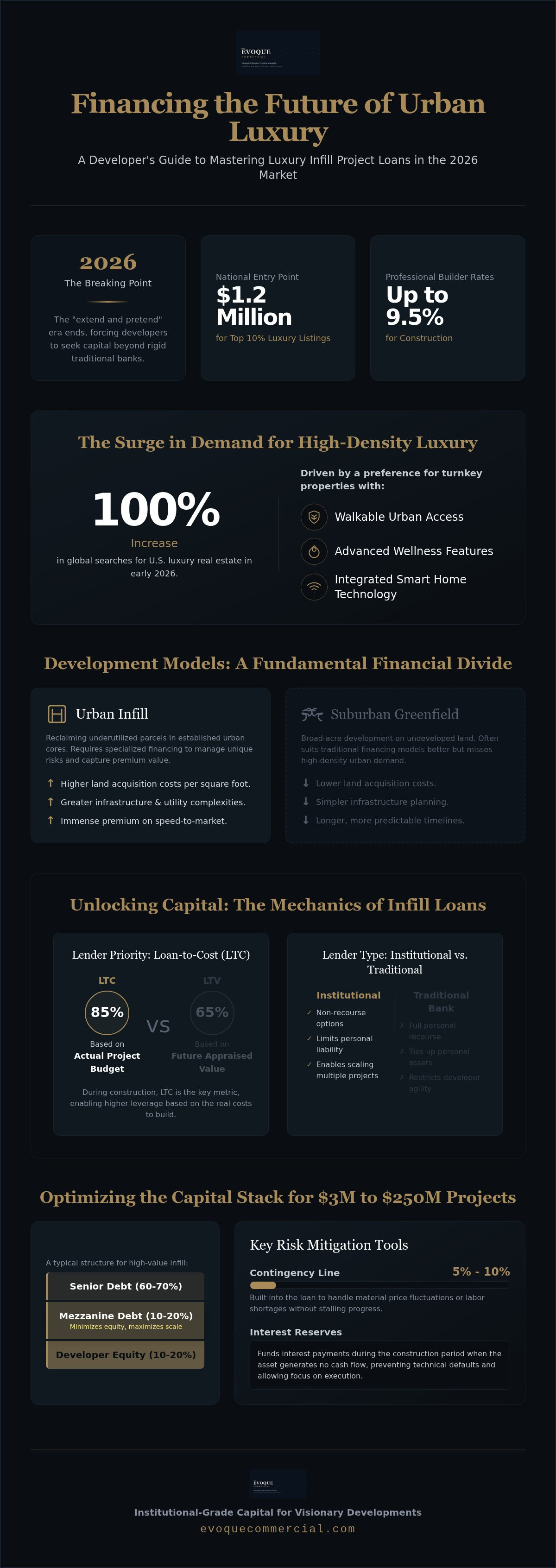
The "extend and pretend" era for commercial real estate has finally reached its breaking point in 2026. This shift leaves middle-market developers to face a landscape where traditional banks are more rigid than ever. While the national entry point for luxury listings remains at approximately $1.2 million and construction rates for professional builders range up to 9.5%, the capital required to build high-end urban assets is becoming harder to secure through conventional channels. You know that urban zoning risks and skyrocketing acquisition costs don't wait for a bank’s committee to catch up. Finding reliable luxury infill project loans requires moving beyond standard lending and into the realm of structured, institutional-grade capital.
We understand that a stalled project is more than just a delay; it's a drain on your equity and professional reputation. This guide will help you master the complexities of financing luxury urban infill projects by leveraging capital strategies that provide the flexibility your development demands. We'll explore how to achieve high LTC ratios and ensure a seamless transition from land acquisition to the first vertical draw. From navigating the latest regulatory shifts to securing reliable draw schedules, you'll gain the blueprint for executing high-value urban developments with precision.
The Strategic Role of Luxury Infill in Modern Urban Markets
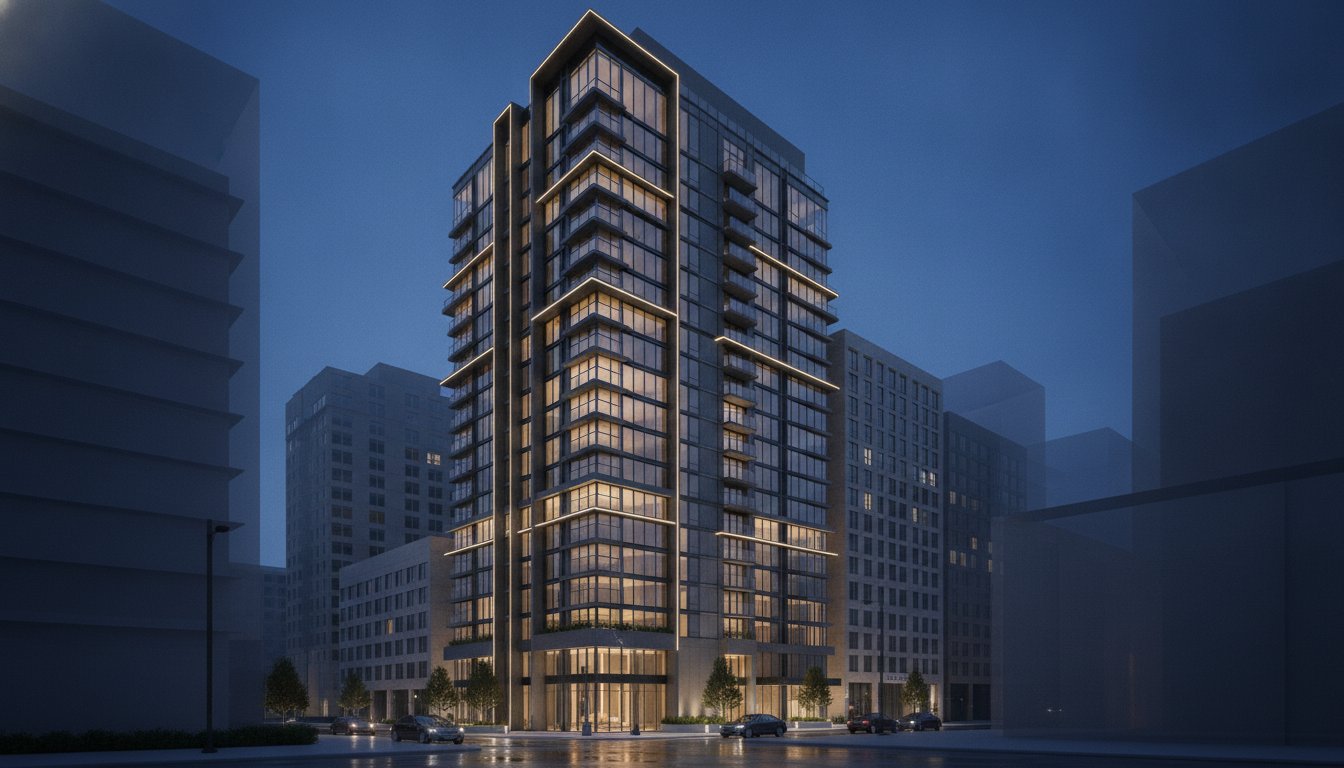
Luxury infill represents the intersection of high-density architectural ambition and strategic site selection. Unlike broad-acre greenfield projects, this niche focuses on reclaiming underutilized parcels within established urban cores to create high-value residential assets. In 2026, the national entry point for the top 10% of luxury listings sits at approximately $1.2 million. This reality creates a high floor for development costs. Developers must balance the physical constraints of dense environments with the uncompromising expectations of ultra-luxury buyers. These projects require more than just standard financing. They demand specialized luxury infill project loans that account for the unique risks of urban construction.
Infill vs. Greenfield: Financial Implications
The financial architecture of urban infill development differs fundamentally from suburban expansion. Land acquisition costs per square foot are significantly higher in premium urban neighborhoods. You aren't just buying dirt; you're buying proximity to established cultural and economic hubs. Infrastructure complexities also add layers of cost. Connecting to aging utility grids or managing site remediation requires significant pre-development capital. Because these urban sites are often smaller, the premium on speed-to-market is immense. Every day of delay in a high-interest environment erodes the developer's margin.
The 2026 Demand for High-Density Luxury
The modern affluent buyer has shifted toward walkable luxury. There's a growing demand for boutique multifamily units and custom estate clusters that offer privacy without isolation. In the first five months of 2026, global searches for U.S. luxury real estate increased by 100%. This surge is driven by a preference for turnkey properties equipped with wellness features like infrared saunas and advanced smart home technology. These high-cost specifications push construction budgets far beyond standard residential benchmarks. Financing must adapt to these realities. Traditional lenders often fail to grasp the value of sustainable, eco-conscious materials that define 2026 luxury. Securing luxury infill project loans through a partner who understands these boutique requirements is essential for maintaining architectural integrity while hitting ROI targets. Structured capital solutions become the bridge between visionary design and fiscal reality.
Mechanics of Luxury Infill Project Loans
Lenders evaluating luxury infill project loans prioritize Loan-to-Cost (LTC) over traditional Loan-to-Value (LTV) metrics during the construction phase. LTC focuses on the actual budget required to complete the build. LTV relies on a projected future value that can be volatile in shifting urban markets. For projects ranging from $3 million to $250 million, the capital structure must account for high-end finishes and specialized trades. Managing these costs requires a rigorous draw schedule that aligns with milestones rather than just dates. This ensures that capital is available for premium materials, such as imported stone or wellness technology, exactly when the trades arrive. Institutional lenders often provide non-recourse options for seasoned developers; this limits the developer's personal liability to standard carve-outs. In contrast, traditional banks usually demand full personal recourse, which can restrict a developer's ability to scale multiple projects simultaneously.
Structuring the Loan for Vertical Growth
The transition from horizontal site preparation to vertical construction is the most volatile period for urban developers. Urban sites often hide infrastructure surprises that require immediate capital. Contingency planning must be built into the loan commitment to handle material price fluctuations or labor shortages. Most institutional-grade structures include a 5% to 10% contingency line. Interest reserves act as a critical risk-mitigation tool for developers by funding interest payments during the construction period when the asset generates no cash flow. This prevents technical defaults and allows the development team to focus on execution rather than monthly debt service during the build.
Appraisal Challenges in Evolving Neighbourhoods
Valuing a pioneering luxury project is difficult when local comparables are outdated or lower in density. Appraisers must look beyond simple square footage to value unique architectural features and wellness-focused amenities. New financing models suggest that incorporating soft costs, such as high-level architectural design and environmental permitting, is essential for an accurate total loan commitment. These costs can represent 20% or more of the total budget in dense urban environments. Securing luxury infill project loans requires an appraisal that recognizes the premium 2026 buyers place on design integrity. If you're preparing a complex budget, a preliminary project review can help align your projections with institutional expectations.
Navigating Entitlements and Pre-Development Hurdles
The gap between land acquisition and shovel-ready status represents the highest risk phase in the development lifecycle. Traditional lenders typically shy away from unpermitted luxury projects because the timeline for approvals is often unpredictable. Strategic developers use luxury infill project loans to secure prime urban parcels quickly, preventing competitors from snatching up limited inventory. This initial capital covers more than just the purchase price; it provides the liquidity needed for environmental assessments, historical reviews, and engineering fees. Securing site control in a dense urban hub often requires a "quick-close" capability that banks can't match. By using bridge capital, you can lock in the land and then navigate the complex entitlement process with the confidence of a funded project. For a deeper look at the mechanics of these early stages, consult our Land Acquisition & Development Loans: Developer’s Guide.
Pre-Development Capital and Site Control
Urban infill sites frequently come with historical designations or environmental baggage that require specialized due diligence. Financing these pre-development hurdles is essential for maintaining project momentum. Developers must also account for federal infrastructure financing for infill projects which can sometimes offset the costs of transit-oriented developments. This capital allows you to finalize architectural plans and secure permits without depleting your primary equity reserves. It's about maintaining site control while you de-risk the project for the main construction loan.
The "Rescue" Scenario: Stalled Entitlements
Even the most well-planned luxury build can hit a wall during the permitting phase. In 2026, many cities are rewriting zoning codes to address housing shortages, leading to administrative bottlenecks and unexpected delays. If a project stalls due to a capital gap or a lender losing patience, bridge financing serves as a lifeline. This rescue capital allows you to maintain ownership and keep the project moving until entitlements are secured. Once you have the permits in hand, you can reposition the project for more favorable senior debt or ground-up construction financing. If your project is already underway but has hit a roadblock, explore our options for Construction Completion Financing: Rescuing Stalled Projects. This strategic approach ensures that temporary regulatory hurdles don't lead to a total loss of equity.
Optimizing the Capital Stack for $3M to $250M Projects
Securing luxury infill project loans for middle-market developments requires a departure from simple senior debt structures. While many lenders limit their exposure to $5 million for basic residential flips, projects in the $10 million to $250 million range demand sophisticated layering. High land acquisition costs and premium construction specifications often create a capital gap that senior debt alone cannot fill. Structured capital solutions provide the leverage necessary to preserve developer equity while maintaining momentum. This approach moves beyond the "one-size-fits-all" mentality of traditional banks. It allows developers to tackle high-density urban assets that would otherwise be out of reach due to excessive equity requirements.
Layering Mezzanine and Preferred Equity
Mezzanine debt and preferred equity serve as the bridge between your senior loan and your cash investment. When we structure these layers, the focus is on optimizing the weighted average cost of capital (WACC). This ensures that the overall cost of debt remains manageable while maximizing the developer's return on equity. Institutional partners look for disciplined risk management at every level of the stack. By layering capital, you can maintain control of the project's vision while meeting the rigorous return hurdles required for high-value urban ventures. We ensure check-size compatibility across our full financing range, allowing for a seamless integration of senior and subordinate debt.
Bridge-to-Stabilization Strategies
The transition from construction completion to a permanent exit is a critical period for luxury developments. In 2026, the lease-up or sales phase for ultra-luxury units often requires a longer runway to achieve peak valuations. Inventory financing allows you to carry completed units without the immediate pressure of a construction loan maturity. Strategic use of post-construction bridge capital provides the liquidity needed to wait for the right buyer rather than rushing a sale. This protects your margins and maximizes the final project valuation. To understand how to time these transitions, see our Bridge Loans for Residential Development: Strategic Guide. If you're ready to optimize your current project’s financing, request a structured capital consultation with our team today.
Strategic Financing Paths with Evoque Lending
Evoque Lending operates at the intersection of institutional grade capital and boutique level responsiveness. For middle market developers, the challenge isn't just finding capital; it's finding a partner who understands the nuances of high density urban sites. We specialize in luxury infill project loans that range from $3 million to $250 million, providing the structural flexibility that traditional banks often lack. Our team doesn't just look at a spreadsheet. We evaluate the developer's track record and the long term viability of the project's vision. This approach ensures that your financing is as sophisticated as the architecture you're creating. We don't believe in one size fits all debt; every project receives a tailored structure that respects its unique capital requirements.
Our Approach to Complex Urban Development
Underwriting a luxury project in a dense urban core requires a deep understanding of site specific risks. We look beyond the asset to the developer's experience, recognizing that execution is the primary driver of value in high stakes markets. Whether you're planning a custom estate cluster or a boutique multifamily hub, our national reach allows for consistent capital delivery across the United States. We've streamlined the path from the initial project review to the final closing table. This efficiency is vital when competing for prime urban parcels where speed to market determines your eventual ROI. Our process is disciplined and transparent, removing the ambiguity often found in legacy lending institutions. For a comprehensive look at these strategies, read our Luxury Residential Development Loans: The 2026 Developer’s Guide to Structured Capital.
Partnering for the Full Project Lifecycle
A project's needs evolve from the moment you identify a parcel to the day you exit the investment. We position ourselves as a strategic partner through every phase, from land acquisition and development to ground up construction and inventory financing. Middle market developers choose Evoque Lending because we provide the scale of a major institution without the rigid committee delays. We handle the complexities of mezzanine debt and preferred equity so you can focus on the build. Our draw schedules are reliable, and our capital is patient, allowing you to execute on premium finishes without the stress of liquidity gaps. Initiating a project review is a straightforward, professional process designed to respect your time and the scale of your ambition. By identifying the optimal financing path early, we help you secure the luxury infill project loans needed to turn underutilized urban land into a high value landmark. We invite you to share your vision and let us structure the capital that makes it a reality.
Executing Your Vision in the 2026 Urban Landscape
The shift toward high density, walkable luxury has redefined the requirements for successful urban development. To navigate the complexities of 2026, you must look beyond traditional banking and embrace structured capital that accounts for the unique risks of dense urban sites. Mastering the mechanics of luxury infill project loans means securing the flexibility to manage entitlement hurdles, high acquisition costs, and premium construction specifications simultaneously. By optimizing your capital stack with mezzanine or preferred equity, you preserve developer upside while ensuring project continuity from acquisition to exit.
Evoque Lending provides specialized expertise in ground up luxury residential construction with a national reach. We combine institutional capital relationships with the responsiveness of a boutique firm, supporting projects ranging from $3 million to $250 million. Our team is ready to help you navigate these high stakes ventures with precision and strategic foresight. Request a project review for your luxury infill development today to align your vision with the right capital structure. We're committed to seeing your next urban landmark reach its full potential and look forward to building a lasting strategic partnership.
Frequently Asked Questions
What is the typical loan-to-cost (LTC) for luxury infill project loans?
Typical loan-to-cost ratios for luxury infill project loans range from 75% to 85% depending on the project's specific capital stack and risk profile. Institutional lenders prioritize the total development budget over projected future value to ensure the project remains fully funded through completion. This higher leverage allows middle market developers to preserve their liquidity for other ventures. We evaluate each project's unique structure to determine the optimal LTC that balances developer upside with institutional safety hurdles.
Can I get financing for land acquisition before entitlements are secured?
You can secure financing for land acquisition before entitlements are fully in place through our specialized bridge-to-entitlement programs. This allows developers to lock in prime urban parcels in competitive markets while they navigate the local permitting process. While traditional banks often require a shovel ready status, our structured capital solutions focus on the underlying site value and the developer's historical success in securing approvals. This strategic site control is essential for high density luxury builds.
How do luxury infill loans differ from standard residential construction loans?
Luxury infill project loans differ from standard construction financing by accounting for the higher architectural costs and dense urban environment risks. These loans often include structured layers like mezzanine debt or preferred equity to handle the $10 million plus budgets common in high end developments. Standard residential loans typically lack the flexibility to fund premium wellness amenities or complex site remediation. We underwrite the developer's vision and the specific demands of the 2026 ultra luxury market.
What are the minimum and maximum loan amounts for luxury developments?
Our financing solutions for luxury developments typically range from a minimum of $3 million to a maximum of $250 million. This broad range allows us to support boutique custom estate clusters as well as large scale, high density luxury multifamily projects. By providing institutional scale with boutique responsiveness, we ensure that projects of varying sizes receive the same level of strategic underwriting and disciplined capital management required for success in modern urban hubs.
Do luxury infill project loans require personal guarantees?
Many of our institutional grade luxury infill project loans offer non-recourse options for experienced developers. This means the lender's primary security is the asset itself, though standard bad boy carve outs for fraud or environmental issues still apply. Traditional bank financing almost always requires full personal guarantees, which can limit your ability to scale. Our structured approach provides a way to protect your personal balance sheet while executing high value urban developments across the country.
How does the draw schedule work for a high-end urban construction project?
The draw schedule for a high end urban project is milestone based to ensure capital flows only as value is added. A third party inspector verifies that specific construction phases are complete before funds are released for the next stage. This disciplined process protects both the lender and the developer by maintaining a balanced budget. It also ensures that specialized trades and premium material suppliers are paid promptly, which is critical for maintaining project momentum in a competitive construction environment.
Can Evoque Lending provide rescue capital for a stalled infill project?
Evoque Lending provides specialized construction completion financing to serve as rescue capital for stalled or distressed infill developments. If a project has stopped due to a capital gap, lender fatigue, or unexpected regulatory delays, our bridge solutions can provide the liquidity needed to reach stabilization. We analyze the remaining cost to complete and the asset's eventual market value to structure a path forward. This allows developers to protect their existing equity and avoid the risk of foreclosure.
What is the typical timeline from project review to loan closing?
The typical timeline from an initial project review to a successful loan closing ranges from 30 to 45 days. This assumes that a complete due diligence package, including architectural plans and environmental reports, is provided promptly. Our boutique structure allows for faster decision making than traditional banking committees. We prioritize efficiency to help developers meet tight acquisition deadlines or avoid delays in the construction schedule, ensuring the capital is ready when the project demands it.